Tuesday, January 22, 2019

Veteran Educator, Thriving SOYO Department, In-House Curriculum, Western Rite Parish


An Interview with Arlyn Kantz
St. Peter Antiochian Orthodox Church, Fort Worth, TX
Arlyn Kantz journeyed from an evangelical background to Orthodoxy seven years ago. She has taught history and Bible at St. Peter’s Classical school for the past six years and has served as director of Christian Education for the parish for the last three. Before becoming Orthodox, she worked in curriculum development for special populations while raising four children. She and Will, her husband of 25 years, recently handed off the reigns of a thriving SOYO department to capable younger hands.

How many students attend your Sunday school? How is your program organized for Sunday classes and how many teachers are assigned per class?
We have approximately sixty children in our parish, birth to eighteen. Twenty-two attend Sunday School on a regular basis. Sunday School meets after mass for forty-five minutes. Our children are organized into three classes: PreK-1st grade, 2nd-6th grade, and then 7th-12th grade. Our two younger classes do not hold firm to the boundary of age, depending on attendance and maturity and the preference of some children to be with a sibling. We do hold a firm line though on attending SOYO, as teens need a space of their own. We are blessed to have two teachers per level. Sometimes teachers rotate every other Sunday and sometimes they team teach depending on what is going on with their personal schedules and the number of children attending each Sunday.

Which curricula do you use for Sunday classes? Please also describe the curriculum created by St. Peter Christian Education Ministry.
SOYO leaders create their own program as they sense the needs of the group and are directly answerable to our priest, Fr. Mark McNary. Younger students are taught using in-house curriculum that has been tested through use in the lower grade Bible classes of our classical school. Sunday school teachers adjust lessons to be more applicable to mixed level classroom and a student population more sporadic in attendance. As lessons are polished, they are added to the parish web site where they are available to teachers to choose from and adjust to their specific needs. Our curriculum is always a work in progress. In fact, we welcome suggestions outside our parish to better serve, if possible, the wider community.
As the first Western Rite director to be interviewed, are there any unique characteristics of St. Peter Sunday school to discuss in comparison to Eastern Rite Sunday schools?
I am not familiar enough with Eastern Rite Sunday School programs to make a qualified comparison. I am confident that they, like us, are striving to make disciples and bring children into contact with the Holy Trinity and His Bride the Church. Because we are situated in a city that home to a large Protestant seminary, it seems good to us that our materials are presented as Bible studies and infused with commentary from the Fathers. We use terms most easily understood by the culture we are trying to reach. The saints and traditions are woven through, but as a support to scriptural interpretation, not as the lesson itself.
How do you keep SOYO/teen students involved and engaged in Sunday school? 
We are blessed with a very supportive priest in the area of teen SOYO. Additionally, we have two energetic and spiritually mature leaders who take the youth into their hearts, praying for them regularly and investing on a personal level. SOYO leadership creates an interactive atmosphere so teenagers are not subjected to simply a second sermon by an adult figure, but are given the freedom to interact, both asking and answering spiritual questions. A mixed set of activities are rotated including crafts, group building, introspection, and sharing.

Do members of your SOYO/teen group organize and participate in events outside of Sunday school?
SOYO youth provide leadership for younger students at the parish’s annual Vacation Bible School. This past year the teens created and manned games at a fall festival outreach for the local community. Youth leaders also issue challenges to encourage spiritual awareness during the week and fellowships are held in private homes.
Please share with us about your Sunday school Lenten programs/activities/outreach.
During Holy Week the youth lead off by manning the first hour of the Paschal vigil.
Do you have advice on how to schedule teacher training events and how to prevent teacher burnout? Are there any resources that you utilize for your own development and enrichment?
Teachers meet a couple time a year informally but most of our communication happens in passing and by email. Most of our volunteers are veteran educators so it is very much a team approach. Most of us come from Protestant backgrounds and are on a bit of an adventure rediscovering the Bible through the eyes of the Fathers. We very much lean on the commentary found in the Orthodox Study Bible and Ancient Christian Commentary on Scripture by Manlio Simonetti. Teacher burnout is always a danger but having two adults committed to each classroom helps ease the problem. We are always looking for and praying about the inclusion of fresh volunteers, guarding against a sense of ownership of a particular ministry.

Are there students with special needs in your Sunday school ministry, and how have you addressed and accommodated those needs so that all students feel welcomed?
We have one student with severe autism who attends SOYO every week. The youth and their leaders have a deep appreciation for his purpose in the Body of Christ and are naturally inclusive. A presentation was given to the ladies group specially about autism and it seems to have affected positively the whole parish body.

Thursday, December 13, 2018

Interview with Church School Director at Holy Trinity Orthodox Church, Little Rock, Arkansas


The latest interview in the ongoing series with church school directors throughout the Antiochian North American Archdiocese is with Sammye Fuller, Director of the (small) church school at Holy Trinity Orthodox Church in Little Rock, Arkansas.

From the Antiochian Orthodox Department of Christian Education (AODCE): http://ww1.antiochian.org/interview-sammye-fuller-supporting-sunday-school-teacher-then-director

Sammye shares what is it like inside the Holy Trinity small church school…
How they creatively work with resources...
How they structure classes...
What curriculum/technology is being used...
How they keep teen/SOYO students involved and engaged in Sunday school…

Sammye Fuller: “Supporting Sunday School as a Teacher, Then as Director”

Sammye Fuller is in her seventh year as Sunday School Director at Holy Trinity Antiochian Orthodox Church in Little Rock, Arkansas. The parish has 25 students enrolled for the 2018-2019 school year.

Please share with us a little about yourself:
Technically, I have been the Sunday School Director for about seven years. However, since we did not have a Director before that, and I was the only Sunday School teacher in the beginning, perhaps it has been longer.

How is your church school organized for Sunday classes and how many teachers are assigned per class?
We have four classes. The preschool class is for 2-ish to 5 years old, with one teacher and one or more helpers when available. Parents often stay if needed. The elementary class is 6-9 years old. There is one teacher and usually one helper, sometimes two. The middle school group is 10-12 years old. This class has one teacher. A helper can be added if needed for any class. The high school class is 13-17 years old. However, having so few children in this age group, it meets every other week and has two teachers that share the teaching.

Which curricula do you use for Sunday classes?
Our preschool teacher has material she has collected and created that is used in a three-year cycle: Old Testament, New Testament, and Feasts and Saints. The elementary and middle school classes use Living Our Orthodox Faith. The high school class uses material researched by the two teachers. Additionally, the three older classes meet for 10 minutes at the beginning of class to learn the books of the Bible in preparation for learning to do “sword drills”. We find that quite a few of our children do not make it on time, so we looked for something to do while we gave them a few extra minutes before starting the lesson.

How do you keep teen/SOYO students involved and engaged in Sunday school?
This is a very tricky subject. As a small church, we don't always have children of every age, thus the blended classes. In the years we have had Sunday School, our teenage population has been small, sometimes as few as one. Recruiting teachers is not easy, so using a teacher for one or two students has been a difficult choice. And, the older children don't always want to be added to a younger class. This year we were able to offer a class every other week for our teenagers. They are currently studying the Ecumenical Councils. They will also look at contemporary heresies. The subject matter seems to interest them, and they use smart phones to find information related to the topic during class.

Do you hold staff meetings? If so, how often and please briefly describe the meetings.
No, more email and quick visits at Coffee Hour.

Please share with us about your Christmas program (past and/or present).
The Christmas program is usually a traditional telling of the Nativity, presented by the preschool class during coffee hour. Some years, the older children have taken part.

Wednesday, September 19, 2018

Creative Arts Workshops in a Small Church School Setting

The 2019 Creative Festivals Theme was recently announced by the Antiochian Orthodox Archdiocese: 
Antiochian Village: 
Past, Present and Future
“I can do all things through Christ 
who strengthens me.” (Philippians 4:13)

Please note: The Department of Christian Education organizes the Creative Arts Festival which includes art, photography, poetry and creative writing. The Department of Youth organizes the Bible Bowl and the Oratorical Festival—for more information, please click on this link:

Planning for the Creative Festivals in a small church school can be challenging, especially if resources are already stretched and staff are already wearing multiple hats. The key is to be creative with the Creative Festivals! Here are suggestions from a Creative Arts Coordinator at a small church school. 
Joy Wise is Coordinator at St. Thomas Orthodox Church in Snohomish, Washington.

"I made the decision to work on the CAF during Sunday School. I spent time getting familiar with the theme and the lesson plans, which I found invaluable. I was working with middle school aged kids, and spent about three weeks developing the theme with them. I took it in small chunks and encouraged them to relate the theme to what they see/experience in Liturgy. The lesson plans were really great. I looked at the plans for all ages, and ended up using ideas from each of them. I also used a vlog from "Be the Bee." It helped to expand the theme."
Lesson plans for Creative Festivals 2019 for grades PK-12 are available at: 

Gathering Materials for Creative Arts Festival (CAF) Workshops
"I found that it is helpful to have good quality poster board. This is the base of every project. Pay attention to the size requirements of the CAF. I had all kinds of crafting materials: colored pencils, paints, glue, scissors, straight edges, lots of scrapbooking paper and card stock, colored pens, glitter. I gathered it all at sales and with coupons. The main thing is to have the materials displayed in a way that is easy for the students to access. And, it is helpful that the kids have a nice space to work in."
Creative Arts Festival (CAF) Eligibility, Rubrics, Submission Requirements
"Familiarize yourself with the CAF website. Look everything over so that you know the rubrics for each entry. Contact the CAF director for your diocese. Let them know that you will be participating. Ask if you can help them in anyway and if they have any further requirements. You have to think ahead to get ready for shipping the artwork. Make sure that you know the "due date." "

Approach for This School Year
"We are looking at a new year for CAF and a new theme. Since we are a small parish, we have chosen to teach the CAF Theme throughout the year in our Sunday School classes, and will focus on the actual art projects on a quarterly basis. We want to stretch it out in order to develop the theme thoroughly. The theme has so many layers, and we want to make sure that each student has the time to understand the theme and how it relates to Liturgy, to their community, and to themselves. So we will review it throughout the year as we work on the art projects."

Multiple Posters for the 2019 Creative Festivals are available to download and print: 

Thursday, August 30, 2018

Approaching the New Church Year

Dear Sunday School Directors,

As the excitement of the new church year approaches, I greet you with a prayer for the new year that can be shared with church school staff and students:


I am pleased to announce new curriculum is now available from the Antiochian Orthodox Department of Christian Education (AODCE). This curriculum focuses on the life of Christ as shown through the Great Feasts of the Church. Lessons for K-12 students are free to download on the Department's website:

http://ww1.antiochian.org/great-feasts-life-our-lord

In September's issue of The Word magazine, several Orthodox Christian Education resources are highlighted by the AODCE, including the theme for the 2019 Creative Festivals. Please see the the full version at the end of this post.

By using the following link, you will have access to three Orthodox Christian Christmas plays from Orthodox Witness. These plays are free!
http://orthodoxwitness.org/orthodox-christmas-plays/


I invite you to join the Facebook community of Orthodox Christian Sunday School directors. The group discusses topics relevant to church school directors and provides support directly from the AODCE and fellow directors. This Fall through Facebook Live video, I will review the new Great Feasts of the Church curriculum, as well as other materials and resources. Please join us!

In Christ,
Anna-Sarah Farha
Associate, Antiochian Orthodox Department of Christian Education


Wednesday, June 6, 2018

Closing the Church School Year, Part IV

Closing the Church School Year: Catechesis of the Good Shepherd

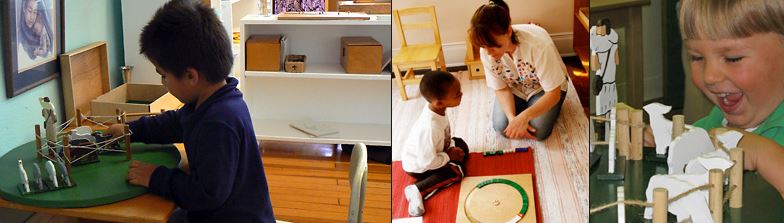
Shelley Finkler, Director of Catechesis of the Good Shepherd at St. John Orthodox Cathedral, Eagle River, Alaska and Formation Leader at The National Association of Catechesis of the Good Shepherd (USA) shares how her parish closes the church school year.

“Our parish, St John Orthodox Cathedral in Eagle River, Alaska, uses Catechesis of the Good Shepherd for Church School. We have been developing the program since 2009 and opened our first atrium in 2010. The year ends with celebration! First, we celebrate Pascha, then Baptism, and on the last day we celebrate Pentecost in anticipation of the feast. The children are invited to contemplate the new color of the Pentecost season: green for growing in the Holy Spirit and the gifts that the Holy Spirit brings for all of us. Then we have a party outside with treats and games. 
We then store our atrium materials to protect them from summer dust and grime and that's it for the end of the year. Most of our efforts with parents and families, such as recruiting volunteers, training catechists and making materials, are done in August. Summer in Alaska comes quickly and is short and precious, so we wait to ask people to think about commitments for the coming school year until summer is nearly over. We have found that asking for volunteer commitments in May or June usually evokes a "No" or "Ask me later" response. So, we wait and have much more success in August. Church School volunteers are also usually ready to take a break from that activity and are less receptive to fresh requests for further volunteering. 
There is very little paperwork with the Catechesis of the Good Shepherd program and no new paper or products need ordering for the coming school year, so that particular piece of Church School is not an issue requiring forward planning. The only planning needed by the Director is arranging for volunteers to attend training courses. This particular task usually occurs during midwinter and Lent, not at the end of the school year, so people have time to plan.”

For more information on CGS, contact Shelley at shelleyfinkler@gmail.com or visit The National Association of the Catechesis of the Good Shepherd (USA) at: https://www.cgsusa.org/ 

Also, for information on upcoming CGS training sessions, and to be part of the online CGS discussion with other Orthodox Christian Catechists, join the Orthodox Christian CGS Catechist Facebook Group at: https://www.facebook.com/groups/122456968092269/  

Monday, May 28, 2018

Closing the Church School Year, Part III

The church school summer calendar often includes Vacation Church School. Exciting for some church school directors, overwhelming/intimidating for others. Pulling from the article "New Life in the Summer: Summer Church School", by Nadine Eskoff, we'll look at the how to establish the foundation of a successful and realistic summer church school program in a parish of any size.


Vacation Church School planning & resources
"Put a real ring and enlightened zeal into your parish with a summer church school program. True, most people are looking forward to a little rest and relaxation, summer trips, summer camping; but as the summer goes on, there tends to develop an undercurrent of anxiety, a yearning for something to do, something that can capture that reserve energy and organize it into something positive."
"A summer church school of one or two weeks duration is not really as overwhelming as one might think; five basic elements are necessary:
1. desire
2. love for children, church, and education
3. organization
4. hard work

5. pooling of the many, often untapped, resources in the parish and in the community." 
“The summer church school program provides a wonderful opportunity for church growth. Instead of a void or period of stagnation in the summer months, a new excitement is generated to enhance the regular liturgical life of the parish. This is an excellent chance to invite the children in the neighborhood to come and see. Encourage church school children to bring their friends. The children also inspire their parents to want to come and participate.”

Theme

"A basic theme should be decided upon early in the summer so that your program can be well publicized through the parish news, and mechanics, like car pools, can be arranged. Generally, the theme should be one not covered in great depth during the regular school year, due to lack of time."

Schedule

“Generally the program calls for a similar schedule on four 
of the five days and then on the fifth day, there is a Liturgy followed by a field trip and picnic. We run a three-hour intense program in the morning. This does not put an undue burden on the staff and allows children a half day for play and the opportunity to run off excess energy. Don't let small (or low) attendance discourage you. Our first summer program was attended by 7 to 10 children. With the adjustment to a better time in the summer, the excitement created by the children themselves, and the addition of children from a neighboring Orthodox parish, we began to average as many as 35 children each day.”

Clergy Participation
“Clergy may be particularly enthusiastic about a summer church school program. First of all, it gives the priest an opportunity for interaction with the children, allowing them to grow in their love and friendship for him through the activities and the closeness of the situation. With the flexibility of the schedule, the priest is able to prepare the children in more detail for the celebration of the Liturgy. In our program, on the day before the Liturgy the older children prepare the 'Prosphora' for the offering of the children. On the day itself, the 'Proskomedia' (the Liturgy of Preparation) is done outside the altar (as in the early church), with each child presenting his or her prosphora with the names of the loved ones to pray for during the Liturgy. The responses during the Liturgy are sung by the children, a role which they have been rehearsing all week.”

Program enhances summer parish life
“At the end of the session a display of the children's materials can be placed in the Church hall or foyer; perhaps a short presentation can be made on the following day for the whole parish to enjoy.”


Online Vacation Church School Resources

Teach students a new skill by including a Prosforo baking session for older students as part of Vacation Church School. Lesson plan, puzzle activity, and sample photos available through this link:

An online Orthodox Christian catalog with Vacation Church School materials for purchase:

"The Hub" from the Orthodox Church in America (OCA) describes many details of Vacation Church School, such as choosing a theme, daily schedule, choir rehearsal, and more:

The final post in this series about closing the church school year will focus on Catechesis of the Good Shepherd and how church schools using this program could close their Atriums for the summer and then prepare for the upcoming school year.


Tuesday, May 22, 2018

Closing the Church School Year, Part II

Toward the end of May and into June, church schools focus on closing the school year and preparing for summer activities within the parish. Part II of our series will focus on enrichment opportunities for church school staff, including training, retention, and recruiting. We'll refer to the Church School Directors Manual by the Antiochian Orthodox Department of Christian Education. The full manual in pdf format is available through this link:

All church school staff members - seasoned veterans and newbies alike - will benefit from a training program. Most church school teachers and directors are not professionals. They often feel hesitant and unqualified. Trainings are a wonderful way to boost the confidence of existing staff and also recruit new staff. Contact the Antiochian Orthodox Department of Christian Education to find out if there are planned training sessions in your area and/or to schedule your own training.

Options for Teacher Training
- Teaching the faith by your parish priest or learned layperson.
- Professional teachers in the parish can offer training sessions on: 
      1. lesson plans 
      2. crafts and bulletin boards
      3. cooperative learning
      4. class management
      5. time management

- Retreats led by the parish priest, special speaker, or a monastic can enhance the spiritual life of the teachers and increase their knowledge about the Orthodox faith.
- Antiochian Orthodox Diocesan Coordinators can be contacted to schedule a teacher training. For a full list of Diocesan Coordinators, visit the link below. 


A church school staff also includes non-teaching staff: those who can help with music (if you wish to have an on-going program of learning church hymns or even a children’s choir), and those who can help with special projects.
Valuable resource people are: 
1) pageant directors, stage crew, prop-makers, costumers 
2) those who can help with processions
3) those with special knowledge on scripture or Divine Liturgy as guests for class sessions of middle or high school
4) those with art or writing expertise, or organizational skills who can help with developing the Creative Festival work and with the organizing and submitting of projects.

(Taken from Section 7.3.4 of the Church School Directors Manual by the Antiochian Orthodox Christian Department of Christian Education.)

The link below will share an excellent article about student "intelligences" that could be included in a teacher training packet. Although directed toward parents, church school teachers (and directors) will benefit from learning about the various and differing ways individual students learn.
"Our Orthodox tradition is richly and “multiply” abundant with ways to know and grow in God through Scripture, liturgical worship, icons, hymns, and personal prayer. However your children are “smart,” you can engage them in ways that are true to their personalities and to our faith. Discerning your children’s “intelligences” is the key to helping them learn and grow. Below are the different kinds of intelligences, and some practical ways that your children can use their gifts to glorify God."
Article written by Stephania Gianulis for the Greek Orthodox Archdiocese Department of Religious Education


Additional online articles and resources for church school staff are regularly posted on the Orthodox Christian Church School Directors Facebook group. Visit the page and join the Facebook group by clicking on this link:

Next, Part III of this series will focus on Vacation Church School, including planning and online resources.